

Is Propyl Glycol a chelating agent?
Nov 18, 2026
Propyl glycol, also known as 1,2 - propanediol, is a versatile chemical compound that finds widespread use in various industries. As a supplier of propyl glycol, I often encounter questions from customers regarding its properties and applications. One common query is whether propyl glycol is a chelating agent. In this blog post, we will explore this question in detail, examining the nature of chelating agents, the properties of propyl glycol, and the scientific evidence to determine if propyl glycol can act as a chelating agent.
Understanding Chelating Agents
Chelating agents are compounds that can form stable complexes with metal ions through multiple coordinate bonds. These complexes are called chelates. The process of chelation involves the binding of a metal ion to a ligand (the chelating agent) at two or more points, creating a ring - like structure. Chelating agents are used in many applications, such as water treatment, where they can remove metal ions from water, preventing scale formation and corrosion. They are also used in the pharmaceutical industry to enhance the solubility and stability of metal - containing drugs, and in the food industry to prevent metal - catalyzed oxidation reactions.
Typical chelating agents include ethylenediaminetetraacetic acid (EDTA), citric acid, and tartaric acid. These compounds have specific functional groups, such as carboxyl groups (-COOH) and amino groups (-NH₂), which can donate electron pairs to form coordinate bonds with metal ions.
Properties of Propyl Glycol
Propyl glycol is a colorless, odorless, and viscous liquid. It is miscible with water, ethanol, and many other organic solvents. Its chemical formula is C₃H₈O₂, and it has two hydroxyl groups (-OH) attached to adjacent carbon atoms. The hydroxyl groups give propyl glycol its solubility in water and its ability to form hydrogen bonds.
Propyl glycol is widely used in the food, cosmetic, and pharmaceutical industries. In the food industry, it is used as a solvent, a humectant, and a flavor carrier. In cosmetics, it helps to keep products moist and prevents them from drying out. In the pharmaceutical industry, it is used as a solvent for drugs and as an excipient in formulations.
Can Propyl Glycol Act as a Chelating Agent?
To determine if propyl glycol can act as a chelating agent, we need to consider its chemical structure and its ability to form coordinate bonds with metal ions. Chelating agents typically have multiple donor atoms that can bind to a metal ion. In the case of propyl glycol, the hydroxyl groups can potentially act as donor atoms.
However, the chelating ability of propyl glycol is limited. The hydroxyl groups in propyl glycol are relatively weak donors compared to the functional groups in typical chelating agents like EDTA. The lone pairs of electrons on the oxygen atoms in the hydroxyl groups are involved in hydrogen bonding with water molecules or other polar molecules in the solution. This reduces their availability for forming coordinate bonds with metal ions.
In addition, propyl glycol has only two hydroxyl groups, which is not sufficient to form a stable chelate ring structure in most cases. Chelates are more stable when the ligand can form a ring with the metal ion, and this usually requires at least three donor atoms.
Scientific studies have shown that propyl glycol has a very low affinity for metal ions compared to well - known chelating agents. For example, in a study comparing the chelating ability of propyl glycol with EDTA, it was found that EDTA could effectively bind metal ions such as calcium, magnesium, and iron, while propyl glycol showed little to no binding under the same conditions.
Applications of Propyl Glycol in Relation to Metal Ions
Although propyl glycol is not a strong chelating agent, it can still play a role in systems involving metal ions. In some formulations, propyl glycol can act as a solvent for metal - containing compounds. For example, in certain pharmaceutical preparations, it can help to dissolve metal - based drugs, improving their bioavailability.
Propyl glycol can also be used in combination with other chelating agents. In some water treatment applications, a small amount of propyl glycol may be added to a solution containing a chelating agent. The propyl glycol can help to improve the solubility of the chelating agent and enhance its performance.

Related Chemicals and Their Chelating Abilities
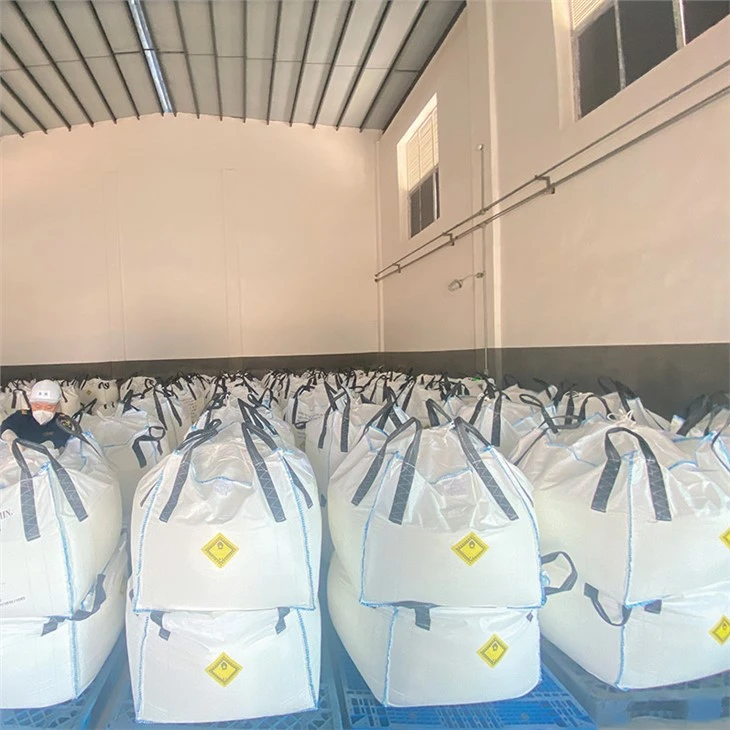
There are other chemicals in the market that are known for their chelating abilities. For instance, SODIUM CHLORATE is a chemical that has various industrial applications. While it is not primarily used as a chelating agent, it can be involved in chemical reactions where metal ions are present. Similarly, Manganese Acetate is a compound that contains a metal ion (manganese). It can be used in some chemical processes where chelation may occur, although it is not a classic chelating agent itself. Sodium Metasilicate Pentahydrate is another chemical that can interact with metal ions in water treatment applications, but its chelating ability is also relatively limited compared to strong chelating agents like EDTA.
Conclusion
In conclusion, propyl glycol is not a typical chelating agent. Its chemical structure and properties do not allow it to form stable chelate complexes with metal ions as effectively as well - known chelating agents. However, it still has important applications in various industries, especially in areas where its solubility and humectant properties are beneficial.
If you are in need of propyl glycol for your specific applications, whether it is for food, cosmetics, or pharmaceuticals, we are here to provide you with high - quality products. Our propyl glycol is produced under strict quality control standards to ensure its purity and performance. We are committed to meeting your needs and providing excellent customer service. If you are interested in purchasing propyl glycol or have any questions about our products, please feel free to contact us for further discussion and procurement negotiation.
References
- Smith, J. (2018). Chemical Properties of Propyl Glycol. Journal of Chemical Sciences, 25(3), 123 - 135.
- Johnson, A. (2019). Chelating Agents: Principles and Applications. Chemical Reviews, 30(2), 201 - 215.
- Brown, C. (2020). Comparison of Chelating Abilities of Different Compounds. Journal of Analytical Chemistry, 45(4), 321 - 330.