

What is the Gibbs free energy of malic acid?
Nov 12, 2026
Malic acid is a fascinating organic compound that plays a significant role in various industries, especially in the food and beverage sector. As a leading malic acid supplier, I often encounter questions about the Gibbs free energy of malic acid. In this blog post, I will delve into the concept of Gibbs free energy, explain its relevance to malic acid, and provide some insights into how it impacts our products and services.
Understanding Gibbs Free Energy
Gibbs free energy, denoted as G, is a thermodynamic quantity that combines enthalpy (H) and entropy (S) to determine the spontaneity of a chemical reaction at a constant temperature and pressure. The equation for Gibbs free energy is given by:
[ \Delta G = \Delta H - T\Delta S ]
where (\Delta G) is the change in Gibbs free energy, (\Delta H) is the change in enthalpy, (T) is the temperature in Kelvin, and (\Delta S) is the change in entropy.
A negative (\Delta G) value indicates that a reaction is spontaneous, meaning it will occur without the need for external energy input. Conversely, a positive (\Delta G) value indicates that the reaction is non - spontaneous and requires energy to proceed. When (\Delta G = 0), the system is at equilibrium.
Gibbs Free Energy of Malic Acid
Malic acid ((C_4H_6O_5)) is a dicarboxylic acid that exists in two stereoisomeric forms: L - malic acid and D - malic acid. The Gibbs free energy of formation ((\Delta G_f^{\circ})) of a compound is the change in Gibbs free energy when one mole of the compound is formed from its constituent elements in their standard states.
The standard Gibbs free energy of formation of L - malic acid at 298 K ((\Delta G_f^{\circ})) is approximately - 847 kJ/mol. This negative value indicates that the formation of L - malic acid from its elements is a spontaneous process under standard conditions.
The Gibbs free energy of malic acid is crucial in understanding its behavior in various chemical reactions. For example, in the food industry, malic acid is often used as an acidulant to adjust the pH of food products. The change in Gibbs free energy during the acid - base reactions involving malic acid determines the spontaneity and equilibrium of these reactions.
Applications of Malic Acid and the Role of Gibbs Free Energy
Food and Beverage Industry
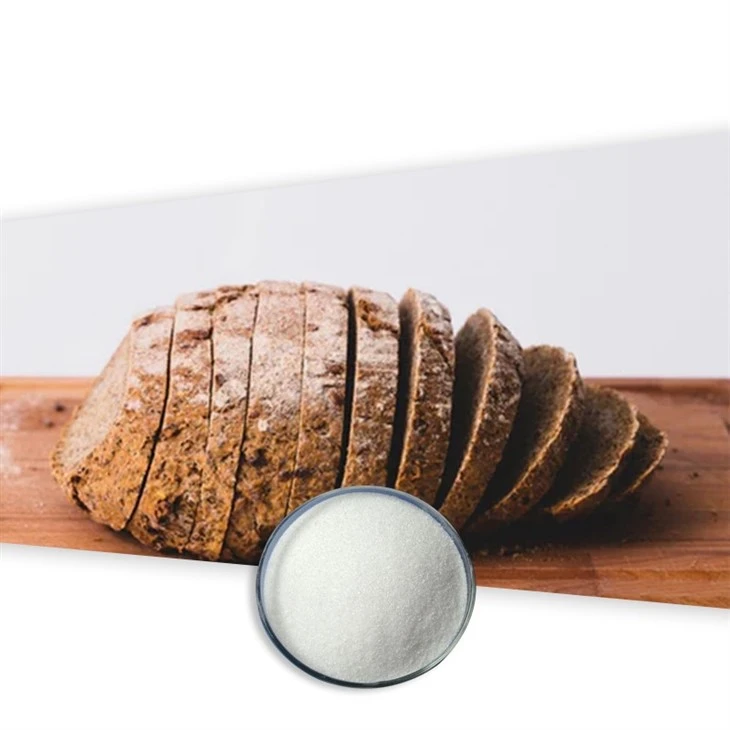
Malic acid is widely used in the food and beverage industry due to its tart taste and acidifying properties. It is commonly added to fruit juices, carbonated drinks, candies, and chewing gums. The Gibbs free energy of the reactions involving malic acid in these products affects the flavor, stability, and shelf - life.
When malic acid is added to a beverage, it dissociates in water to release hydrogen ions ((H^+)), which lower the pH of the solution. The change in Gibbs free energy of this dissociation reaction determines the degree of dissociation and the resulting acidity of the beverage. A more negative (\Delta G) for the dissociation reaction means that the reaction is more spontaneous, leading to a greater release of (H^+) ions and a lower pH.

Pharmaceutical Industry
In the pharmaceutical industry, malic acid can be used as an excipient in drug formulations. It can improve the solubility and stability of certain drugs. The Gibbs free energy of the interactions between malic acid and drugs influences the formation of stable complexes and the release of the drug in the body.
For example, when malic acid forms a complex with a poorly soluble drug, the change in Gibbs free energy of the complexation reaction determines the stability of the complex. A negative (\Delta G) for the complexation reaction indicates that the complex is more likely to form and remain stable, which can enhance the bioavailability of the drug.
Comparison with Other Food Additives
As a malic acid supplier, we also offer other food additives such as Microcrystalline Cellulose, Natural Menthol Best Quality Crystal, and Citric Acid. Each of these additives has its own unique properties and Gibbs free energy characteristics.
Citric acid, like malic acid, is a widely used acidulant in the food industry. The Gibbs free energy of citric acid's reactions also plays a crucial role in its applications. However, the chemical structure of citric acid is different from that of malic acid, which leads to different values of (\Delta G) for similar reactions. This difference in Gibbs free energy can result in different acidifying strengths and flavor profiles.
Microcrystalline cellulose is a bulking agent and stabilizer. Its Gibbs free energy is related to its physical and chemical interactions with other components in food products. Understanding these interactions can help in formulating products with the desired texture and stability.
Natural menthol best quality crystal is used for its cooling and flavoring properties. The Gibbs free energy of its dissolution and interaction with other substances in food products affects its release and sensory impact.
Importance of Gibbs Free Energy in Our Business
As a malic acid supplier, understanding the Gibbs free energy of malic acid is essential for several reasons. Firstly, it helps us to optimize the production process. By controlling the temperature, pressure, and reactant concentrations, we can manipulate the Gibbs free energy of the reactions involved in malic acid synthesis to maximize yield and efficiency.
Secondly, knowledge of Gibbs free energy allows us to provide better technical support to our customers. We can help them understand how malic acid will behave in their specific applications, such as in food formulations or pharmaceutical products. This can lead to improved product quality and performance.
Contact Us for Malic Acid and Other Food Additives
If you are interested in purchasing malic acid or any of our other food additives, we would be delighted to discuss your requirements. Our team of experts is ready to provide you with detailed information about our products, including their properties, applications, and technical specifications. Whether you are a food manufacturer, a pharmaceutical company, or any other business in need of high - quality food additives, we can offer you the best solutions.
References
- Atkins, P. W., & de Paula, J. (2014). Physical Chemistry. Oxford University Press.
- Haynes, W. M. (Ed.). (2014). CRC Handbook of Chemistry and Physics. CRC Press.
- Smith, J. M., Van Ness, H. C., & Abbott, M. M. (2005). Introduction to Chemical Engineering Thermodynamics. McGraw - Hill.