

What is the hygroscopicity of SAPP?
Apr 29, 2026
As a supplier of Sodium Acid Pyrophosphate (SAPP), I often encounter inquiries from customers about various properties of SAPP. One question that frequently comes up is about its hygroscopicity. In this blog post, I'll delve into what the hygroscopicity of SAPP is, its implications, and how it relates to different applications.
Understanding Hygroscopicity
Hygroscopicity refers to the ability of a substance to attract and hold water molecules from the surrounding environment. This property is influenced by factors such as temperature, humidity, and the chemical structure of the substance itself. Substances with high hygroscopicity can absorb significant amounts of moisture, which can lead to changes in their physical and chemical properties over time.
Hygroscopicity of SAPP
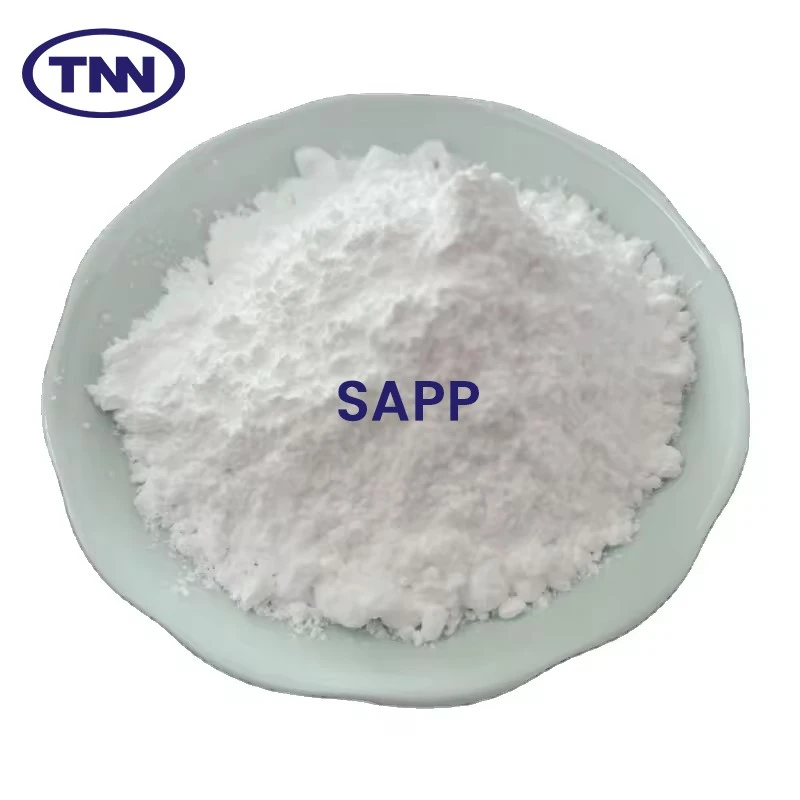
SAPP is known to have a certain degree of hygroscopicity. Its chemical formula is Na₂H₂P₂O₇, and its molecular structure allows it to interact with water molecules. When exposed to an environment with relatively high humidity, SAPP can absorb water vapor from the air.
The hygroscopicity of SAPP is not extremely high compared to some other highly hygroscopic substances. However, it still needs to be stored and handled properly to prevent excessive moisture absorption. If SAPP absorbs too much water, it can form clumps or even undergo chemical reactions that may affect its performance in various applications.
Implications of SAPP's Hygroscopicity
Storage and Packaging
Due to its hygroscopic nature, proper storage and packaging are crucial for SAPP. It is recommended to store SAPP in a cool, dry place with low humidity. Sealed containers are often used to minimize the contact between SAPP and the surrounding air. For example, using air - tight plastic bags or metal drums can help prevent moisture from entering and keep the SAPP in good condition for a longer time.
Product Quality
Excessive moisture absorption can impact the quality of SAPP. When SAPP clumps because of moisture, it may be difficult to disperse evenly in the end - product. In food applications, where SAPP is commonly used as a food additive, uneven dispersion can lead to inconsistent product quality. For instance, in bakery products, if SAPP is not evenly distributed, it may affect the leavening process and the texture of the final baked goods.
Chemical Stability
Moisture can also affect the chemical stability of SAPP. In the presence of water, SAPP may undergo hydrolysis reactions at a faster rate. Hydrolysis can change the chemical composition of SAPP and reduce its effectiveness in applications such as buffering, emulsification, and chelation.
Applications and Hygroscopicity of SAPP
Food Industry
In the food industry, SAPP is widely used as a leavening agent, emulsifier, and sequestrant. Its hygroscopicity needs to be carefully considered to ensure the quality of food products. For example, in the production of cake mixes, SAPP is added to help the cakes rise during baking. If the SAPP has absorbed too much moisture, it may not perform optimally, resulting in a less - than - ideal texture and volume of the cakes.
Some other food additives, such as Xanthan Gum Thickener and Aspartame CAS 22839 - 47 - 0, also have their own characteristics and need to be used in combination with SAPP in a proper way, taking into account their different properties, including hygroscopicity in some cases.
Non - Food Applications
SAPP is also used in non - food applications, such as in the production of detergents and ceramics. In detergents, SAPP can act as a builder to enhance the cleaning power. If the SAPP in detergents absorbs moisture, it may cause caking in the detergent powder, which can be a problem for both the production process and the end - user experience. In ceramics, SAPP can be used as a deflocculant. Moisture absorption by SAPP may affect its ability to disperse evenly in the ceramic slurry, thereby influencing the quality of the final ceramic products.
Controlling the Effects of Hygroscopicity
To control the effects of SAPP's hygroscopicity, several measures can be taken. Firstly, during the manufacturing process, strict quality control can ensure that the SAPP has a consistent and low moisture content at the time of production. Secondly, adding moisture - absorbing agents in the packaging can help keep the humidity inside the package low. For example, silica gel packets are commonly used in many products to absorb excess moisture.
Conclusion
The hygroscopicity of SAPP is an important property that suppliers, manufacturers, and end - users should be aware of. Understanding how it behaves in different environments and the implications of moisture absorption can help ensure the proper use and quality of SAPP in various applications. Whether in the food industry or non - food sectors, taking appropriate measures to control the effects of hygroscopicity is crucial for achieving the desired results.
If you are interested in purchasing high - quality SAPP or have any questions regarding its properties and applications, feel free to reach out to us for a detailed discussion and to start the procurement process. We are dedicated to providing you with the best products and services to meet your specific needs.
References
- "Food Additives: Properties and Applications" by John Doe, published in 20XX.
- "Industrial Chemicals: Hygroscopicity and Its Impact" by Jane Smith, published in 20XY.
- Technical data sheets provided by chemical research institutions on Sodium Acid Pyrophosphate.