


The application of GLP-1 drugs such as semaglutide
Mar 05, 2026
GLP-1 drugs, defined as drugs that exert their effects wholly or partially by activating the glucagon like peptide-1 receptor (GLP-1R), have been approved for the treatment of type 2 diabetes, obesity, and related cardiovascular diseases, kidney diseases and metabolic liver diseases.
These drugs act on peripheral GLP-1 receptors to increase insulin secretion and inhibit glucagon secretion, while also acting on the brain to slow down gastric emptying and suppress appetite, leading to weight loss. Smeglutide, as a GLP-1R agonist, has been approved for the treatment of type 2 diabetes, obesity, and related cardiovascular and renal diseases, and metabolic dysfunction related steatohepatitis. Tilpodide, as a dual agonist of GLP-1R and GIPR, has been approved for the treatment of type 2 diabetes, obesity and obstructive sleep apnea.
A large amount of preclinical and clinical data supports the potential therapeutic benefits of GLP-1 drugs for various neurological disorders.
Recently, Professor Daniel J. Drucker from the University of Toronto, a pioneer in GLP-1 research, published a research paper titled "Glucagon like peptide-1 medicines in neurological and psychological disorders" in the Cell Reports Medicine journal.
This review systematically summarizes preclinical data on how GLP-1 drugs interact with central nervous system (CNS) pathology and improve its condition, as well as clinical data on GLP-1 drugs in neurodegenerative diseases, substance use disorders, psychiatric disorders, headaches, strokes, and epilepsy.

GLP-1 drugs (GLP-1R agonists) are used to treat type 2 diabetes (T2D) and obesity, and can reduce the incidence of cardiovascular diseases (including stroke) in T2D patients. The abundant evidence from real-world data and clinical trials highlights the therapeutic potential of GLP-1 drugs in treating neurodegenerative diseases such as Parkinson's disease and Alzheimer's disease.
Similarly, increasing evidence suggests that the use of GLP-1 drugs may reduce the proportion of addictive behaviors such as smoking and drinking among individuals with substance use disorders. There are also some clinical data indicating that GLP-1 drugs are beneficial for patients with migraine or intracranial hypertension. Existing data indicates that the majority of patients with neurological and psychiatric disorders have acceptable safety when using GLP-1 drugs.
In this review paper, the authors reviewed recent clinical evidence and ongoing clinical trials, exploring the effectiveness and safety of GLP-1 drugs in a wide range of neurological disorders.
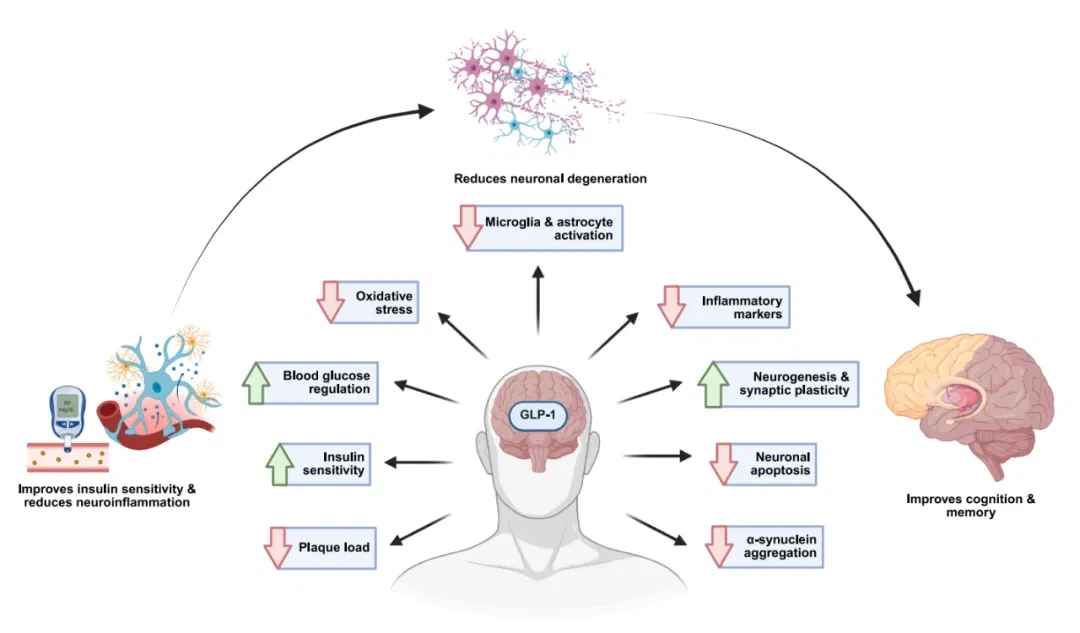


Despite extensive preclinical and real-world evidence supporting the exploration of GLP-1 drugs in a wide range of neurological and psychiatric disorders, there are currently no large confirmatory phase III clinical trials that can approve GLP-1 drugs for any neurological disease. GLP-1 drugs may improve brain health by directly or indirectly transmitting signals to relevant central nervous system circuits, or by improving concomitant metabolic comorbidities (type 2 diabetes, obesity, hypertension, dyslipidemia, central and peripheral insulin resistance, and dysfunctional inflammation).
Therefore, the role of GLP-1 drugs in neurological clinical practice will continue to be rapidly influenced by newly emerging clinical trial data, which will provide clearer evidence for the potential use and limitations of GLP-1 drugs in neurological and psychiatric disorders. Despite the enthusiasm for the potential of GLP-1 drugs in the treatment of central nervous system diseases, there are currently no large-scale clinical trials that can prove their definite efficacy and acceptable safety in any neurological or psychiatric disorders.


