How does anhydrous sodium sulfate remove water
Mar 20, 2024
Anhydrous sodium sulfate is widely used as a dehydrating agent in various chemical and industrial processes. It has a unique ability to remove water from liquid and gaseous substances by adsorbing water molecules on its surface. In this article, we will investigate how anhydrous sodium sulfate removes water from various sources and how to achieve this.
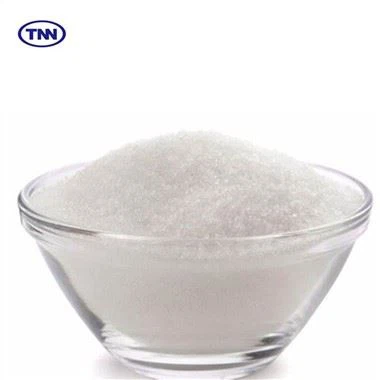
But first of all, what is anhydrous sodium sulfate? It is a white odorless crystalline compound with the chemical formula Na2SO4. Unlike the hydrated form (Na2SO4.10H2O), anhydrous sodium sulfate does not contain water molecules, and the hydrated form contains 10 water molecules per unit formula. Now let's talk about the principle of dehydration with anhydrous sodium sulfate. The basic idea is that anhydrous sodium sulfate has a strong affinity for water molecules and can combine with water molecules through hydrogen bonding. This means that when anhydrous sodium sulfate comes into contact with aqueous substances, it will adsorb water molecules onto its surface, effectively removing water from the substance.
Anhydrous sodium sulfate is commonly used to remove water from organic solvents (such as ethanol) and inorganic compounds (such as acids and bases). In these cases, a small amount of anhydrous sodium sulfate is added to the substance, and the mixture will remain static for a period of time. During this period, anhydrous sodium sulfate adsorbs water molecules from the substance, leaving a dry and anhydrous product. The laboratory also uses anhydrous sodium sulfate to dry gases such as nitrogen and argon. In this case, anhydrous sodium sulfate is introduced into the pipeline through which the gas passes. When the gas passes through the pipeline, any water vapor present in the gas is adsorbed by anhydrous sodium sulfate, forming a dry gas that can be used for experiments.
In short, anhydrous sodium sulfate is an important dehydrating agent, and its ability to adsorb water molecules to the surface is based on its ability to bind with hydrogen, allowing it to form bonds with water molecules and fix them on the surface. Used in various chemical and industrial processes to remove moisture from liquids and gases. Anhydrous sodium sulfate plays an important role in many laboratory and industrial applications, whether used for drying solvents, acids, bases, or gases.